As anyone who knows me would be sure to tell you, “That man has too much free time. He needs more things to do.”
*sigh*
I didn’t mean this to happen – didn’t mean to find a new hobby. I was only thinking about a very simple project – making a channel switch for my guitar amp. However, an ordering-online-kerfuffle got me thinking bigger.
All I needed for my simple project was a jack, a switch and a box. The box, I reckoned I’d work out later and I had a handful of jacks – but no switches. So I did what anyone without access to a local electronics store would do – I ordered one online.
The one that came was the wrong type: Momentary. Not Latching. That would mean that if I wanted it to stay changed to the channel I wanted, I’d have to keep my foot on it.
Useless.
So I ordered the correct one and then set about wondering what I could do with the momentary switch.
And while I was waiting for delivery, I had an aul sconce at the interwebs.
My initial thought was to hook it up to some kind of an FX loop so that I could flick between a clean sound and a weird modulation effect or something like that – something that I wouldn’t want to leave on but just a quick wobble. (I was spitballing)
Unfortunately, what I discovered is that there is a huge DIY guitar pedal community with all sorts of helpful info and schematics and suddenly I was ordering capacitors, resistors and even microchips online.
All the while heroically (read obsessively) trying to brush up on my rudimentary electronics knowledge.
Particularly mind blowing was an article by Mark Hammer about the FY-2 Companion Fuzz, on his now, fortunately archived site on the WaybackMachine. He had a little clip of the pedal’s sound, and I thought – “Wait – I could just make that?” And the rest, as they say, is obsession.
The one that started it all
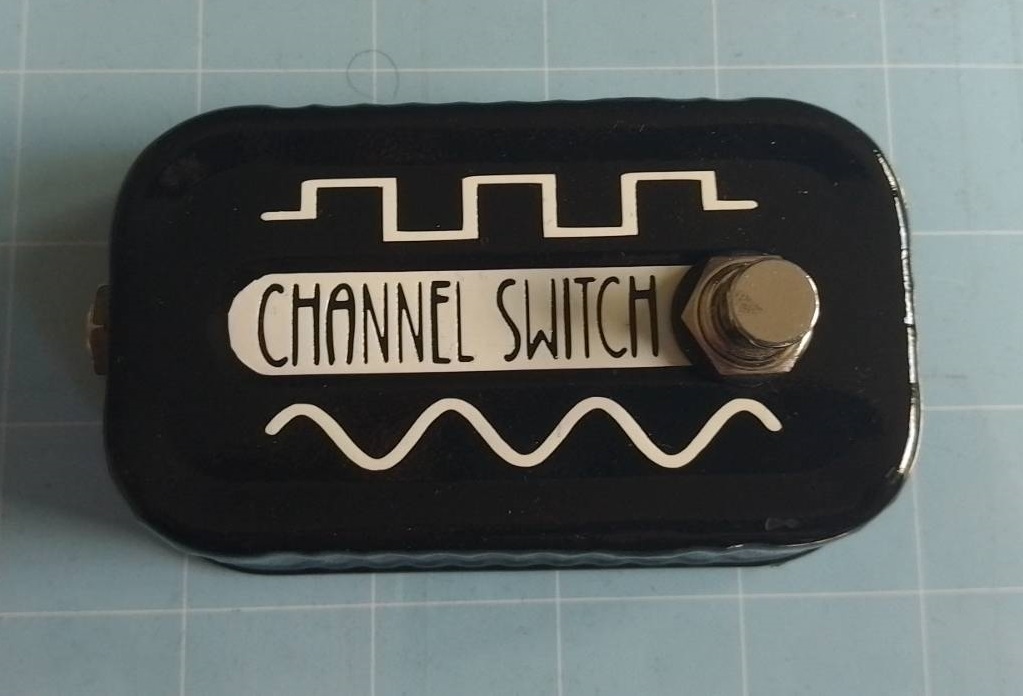
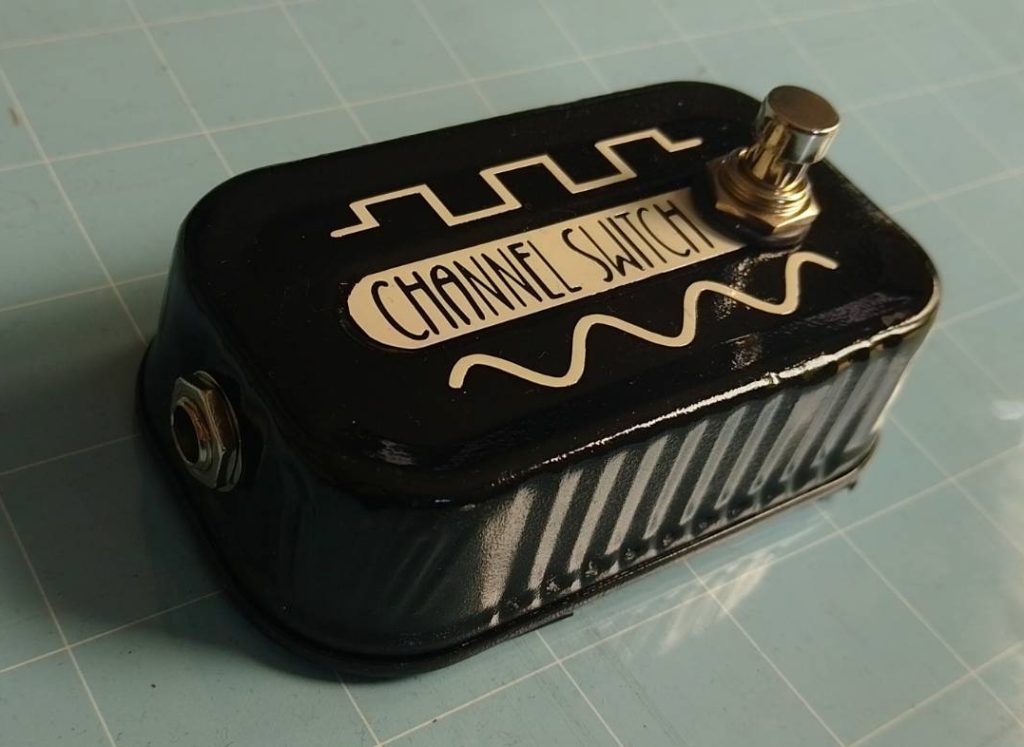
I started playing guitar again and have a nice little Orange Crush 35 amp, which has a jack input for a channel switch (to go between the amp’s clean sound and its onboard distortion).
There’s nothing special to how it works – when the two wires that connect to the jack are crossed, the amp switches channels.
So I could spend €30+ and buy one, or for a couple of bucks I could make one. All I needed was: A jack socket and a switch.
And a box to put them in.
No prizes for guessing why the lines of the decal at the top and bottom are different…